Skip to content
Facebook Linkedin Pinterest YouTube
CHEMCESS
  • EnglishExpand
    • Français
    • Español
    • Deutsch
    • Italiano
    • Nederlands
  • HOME
  • Chemicals
  • Organic Chemicals
  • Chemical Processes
  • Inorganic Compounds
  • Carboxylic Acids
  • About
  • Contact Us
  • Advertise with us
CHEMCESS
  • uses of acetylene
    Chemicals

    Uses of Acetylene

    Acetylene (C2H2) is a simple molecule that finds applications across a wide range of fields. Its unique properties – high flame temperature, rapid heat transfer, and diverse chemical reactivity – make it a valuable material for industries such as metalworking and chemical production.
    Read More Uses of AcetyleneContinue

  • calcium carbide
    Inorganic Compounds

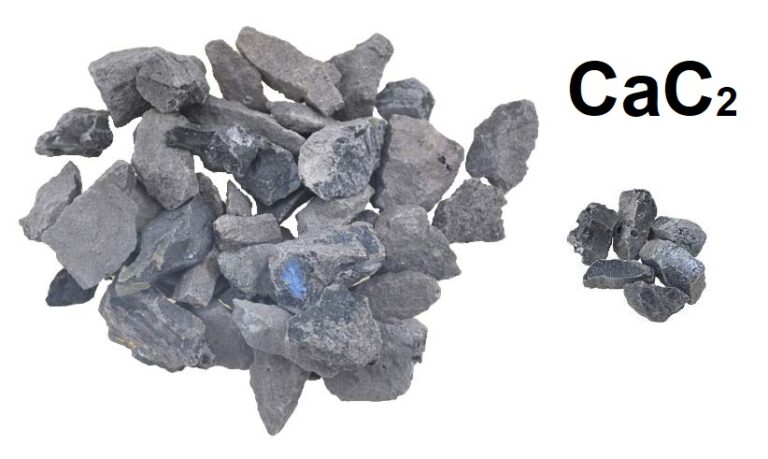
    Calcium Carbide: Properties, Production and Uses

    Calcium carbide, also known as calcium acetylide, is a greyish-black, crystalline compound with the chemical formulat CaC2. Upon contact with water it generates acetylene, a highly flammable gas once widely used for lighting and welding.

    Read More Calcium Carbide: Properties, Production and UsesContinue

  • Butyrolactone structure
    Organic Chemicals

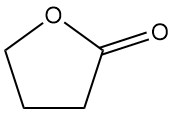
    Butyrolactone: Properties, Production and Uses

    γ-Butyrolactone (CAS 96-48-0), also known as γ-hydroxybutyric acid lactone, is a simple organic compound with the formula C4H6O2. It is a hygroscopic and colorless liquid with a faint odor, might seem unremarkable at first glance.

    Read More Butyrolactone: Properties, Production and UsesContinue

  • Tert-butanol structure
    Organic Chemicals

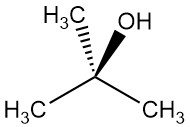
    2-Methyl-2-propanol: Properties, Production and Uses

    2-Methyl-2-propanol, also known as tert-butanol, is the simplest tertiary alcohol with the chemical formulat (CH3)3COH. It is a colorless, solid crystal at room temperature. However, it melts near room temperature (26 °C) to become a viscous liquid with a camphor-like odor.

    Read More 2-Methyl-2-propanol: Properties, Production and UsesContinue

  • 2-butanol structure
    Organic Chemicals

    2-Butanol: Properties, Production and Uses

    2-Butanol, also known as sec-butanol, is a colorless liquid with the formula CH3CH(OH)CH2CH3. It is a secondary alcohol and unlike its structural isomers, 1-butanol, isobutanol, and tert-butanol, 2-butanol is chiral. This means it exists in two forms, (R)-2-butanol and (S)-2-butanol

    Read More 2-Butanol: Properties, Production and UsesContinue

  • 2-Methyl-1-propanol structure
    Organic Chemicals

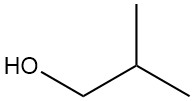
    2-Methyl-1-propanol: Properties, Production and Uses

    2-Methyl-1-propanol, also known as isobutanol or isobutyl alcohol, is an organic compound with the chemical formula (CH3)2CHCH2OH. It is a colorless liquid with a characteristic smell that occurs in natural products as well as in fusel oils.

    Read More 2-Methyl-1-propanol: Properties, Production and UsesContinue

  • 1-butanol structure
    Organic Chemicals

    Butanol: Properties, Reactions, Production and Uses

    Butanol, also known as n-butanol or butan-1-ol, is a primary alcohol with the chemical formula C4H9OH. It’s a colorless liquid with a strong, unpleasant odor, similar to that of burnt whiskey.

    Read More Butanol: Properties, Reactions, Production and UsesContinue

  • 1,2-butanediol structure
    Organic Chemicals

    1,2-Butanediol: Properties, Production and Uses

    1,2-Butanediol, also known as 1,2-butylene glycol, is an organic compound (diol) with the formula HOCH2(HO)CHCH2CH3. It is a colorless, viscous liquid with a slight odor.

    Read More 1,2-Butanediol: Properties, Production and UsesContinue

  • 2,3-butanediol structure
    Organic Chemicals

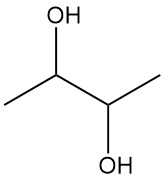
    2,3-Butanediol: Properties, Production and Uses

    2,3-Butanediol (also known as 2,3-butylene glycol) is an organic compound with the formula C₄H₁₀O₂. It is a colorless, viscous liquid that is miscible with water in all proportions. 2,3-Butanediol is a vic-diol, which means that the two hydroxyl groups are located on adjacent carbon atoms.

    Read More 2,3-Butanediol: Properties, Production and UsesContinue

  • 2-Butyne-1,4-diol structure
    Organic Chemicals

    2-Butyne-1,4-diol: Properties, Production and Uses

    1,4-Butynediol or 2-butyne-1,4-diol is an organic compound that is both an alkyne and a diol with the formula C4H6O2. It is a colorless, hygroscopic solid that is soluble in water and polar organic solvents.

    Read More 2-Butyne-1,4-diol: Properties, Production and UsesContinue

  • Butadiene Structure
    Organic Chemicals

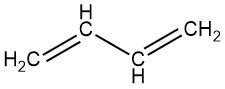
    Butadiene: Properties, Reactions, Production and Uses

    1,3-Butadiene is a colorless gas with a gasoline-like odor. It is the simplest member of the series of conjugated dienes, which contain the structure C=C-C=C, the C being carbon.

    Read More Butadiene: Properties, Reactions, Production and UsesContinue

  • Boron Nitride
    Inorganic Compounds

    Boron Nitride: Properties, Production and Uses

    Boron nitride (BN) is a compound formed by the 1:1 union of boron and nitrogen (elemental neighbors of carbon in the periodic table). Much like carbon, boron nitride exists in multiple crystalline forms, known as allotropes, each mirroring the structure of a specific carbon allotrope.

    Read More Boron Nitride: Properties, Production and UsesContinue

Page navigation

Previous PagePrevious 1 … 7 8 9 10 11 … 20 Next PageNext
At Chemcess, we are dedicated to providing accurate, comprehensive, and trustworthy information. All of our articles are meticulously researched, written, and reviewed by a qualified expert with advanced degrees and extensive research experience in organic, industrial, analytical, and physical chemistry. Our content is exclusively based on peer-reviewed scientific journals, authoritative academic books, and official data from reputable scientific institutions. To learn more about our methodology and commitment to accuracy, you can read our full Editorial Policy.
  • Privacy Policy
  • Editorial Policy
  • Terms and Conditions
  • Advertise with us

Copyright © 2026 | by Chemcess team

  • HOME
  • Chemicals
  • Organic Chemicals
  • Chemical Processes
  • Inorganic Compounds
  • Carboxylic Acids
  • About
  • Contact Us
  • Advertise with us
Search