Skip to content
Facebook Linkedin Pinterest YouTube
CHEMCESS
  • EnglishExpand
    • Français
    • Español
    • Deutsch
    • Italiano
    • Nederlands
  • HOME
  • Chemicals
  • Organic Chemicals
  • Chemical Processes
  • Inorganic Compounds
  • Carboxylic Acids
  • About
  • Contact Us
CHEMCESS
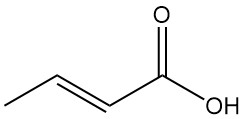
  • Crotonic acid structure
    Carboxylic Acids

    Crotonic Acid: Properties, Reactions, Production and Uses

    Crotonic acid is the trans-isomer of 2-butenoic acid. It is a short-chain, unsaturated carboxylic acid with the chemical formula CH3CH=CHCOOH. The cis isomer of 2-butenoic acid is known as isocrotonic acid.
    Read More Crotonic Acid: Properties, Reactions, Production and UsesContinue

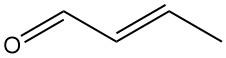
  • crotonaldehyde structure
    Organic Chemicals

    Crotonaldehyde: Properties, Reactions, Production and Uses

    Crotonaldehyde [4170-30-3], also known as 2-butenal, is a colorless liquid with a pungent odor and strong lacrimatory properties. It has a chemical formula of CH3CH=CHCHO, and it exists as two stereoisomers: cis-crotonaldehyde [15798-64-8] and trans-crotonaldehyde [123-73-9].

    Read More Crotonaldehyde: Properties, Reactions, Production and UsesContinue

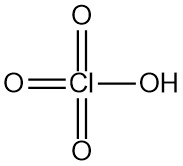
  • Perchloric Acid structure
    Inorganic Compounds

    Perchloric Acid: Properties, Production and Uses

    Perchloric acid is a strong mineral acid with the chemical formula HClO4. It is a colorless, odorless liquid that is usually found in aqueous solutions. Perchloric acid is one of the strongest Brønsted-Lowry acids.

    Read More Perchloric Acid: Properties, Production and UsesContinue

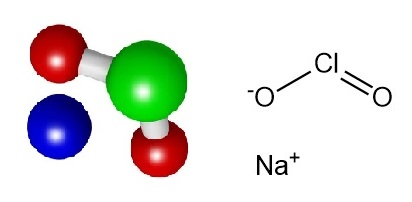
  • Sodium chlorite structure
    Inorganic Compounds

    Sodium Chlorite: Properties, Production and Uses

    Sodium chlorite is the sodium salt of the unstable chlorous acid with the formula NaClO2. It appears as a white, crystalline solid that is soluble in water.

    Read More Sodium Chlorite: Properties, Production and UsesContinue

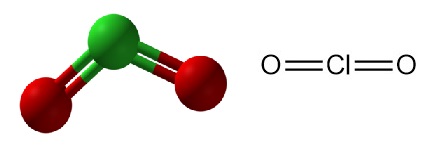
  • Chlorine Dioxide Structure
    Inorganic Compounds

    Chlorine Dioxide: Properties, Production and Uses

    Chlorine dioxide is an inorganic chemical compound with the formula ClO2. It exists as a yellowish-green gas at room temperature, a reddish-brown liquid between 11 °C and −59 °C, and as bright orange crystals below −59 °C. It is usually handled as an aqueous solution and is produced on-site for industrial applications.

    Read More Chlorine Dioxide: Properties, Production and UsesContinue

  • Phenoxy Herbicides structures (2,4-D; 2,4-DB; Dichlorprop; MCPA; MCPB, Mecoprop; 2,4,5-T and Fenoprop)
    Chemicals

    Phenoxy Herbicides: Production, Uses and Toxicology

    During World War II, research on chlorinated phenoxy compounds led to the discovery of 2,4-dichlorophenoxyacetic acid (2,4-D) as a selective herbicide. This discovery revolutionized weed control in grasses and related crops like cereals, rice, and sugarcane.

    Read More Phenoxy Herbicides: Production, Uses and ToxicologyContinue

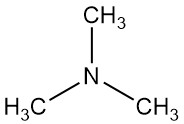
  • Trimethylamine structure
    Organic Chemicals

    Trimethylamine: Properties, Reactions, Production and Uses

    Trimethylamine is an organic compound with the formula N(CH3)3. It is a colorless gas or compressed liquid with a strong fishy odor, at low concentrations. At higher concentrations, the odor becomes more ammonia-like.

    Read More Trimethylamine: Properties, Reactions, Production and UsesContinue

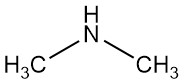
  • Dimethylamine structure
    Organic Chemicals

    Dimethylamine: Properties, Reactions, Production and Uses

    Dimethylamine is an organic compound with the formula (CH₃)₂NH. It is a colorless, flammable gas with an ammonia-like odor, although at low concentrations it can smell like fish, and its odor is more potent than methylamine and less than trimethylamine. Dimethylamine is commonly encountered commercially as a solution in water at concentrations up to around 40%.

    Read More Dimethylamine: Properties, Reactions, Production and UsesContinue

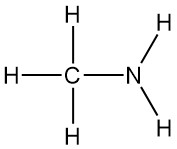
  • Methylamine Structure
    Organic Chemicals

    Methylamine: Properties, Reactions, Production and Uses

    Methylamine is the simplest primary amine, with the formula CH3NH2. It’s a colorless gas that’s derived from ammonia, with one hydrogen atom replaced by a methyl group. It was first synthesized in 1849 by Wurtz alongside dimethylamine and trimethylamine.

    Read More Methylamine: Properties, Reactions, Production and UsesContinue

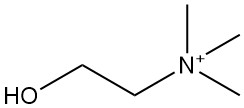
  • choline structure
    Organic Chemicals

    Choline: Properties, Salts, Production and Uses

    Choline [62-49-7], also known as trimethyl(2-hydroxyethyl)ammonium hydroxide, is a quaternary ammonium compound with the molecular formula C₅H₁₅O₂N. It was first isolated from pig bile in 1849 by Stecker and is subsequently found in brain tissue.

    Read More Choline: Properties, Salts, Production and UsesContinue

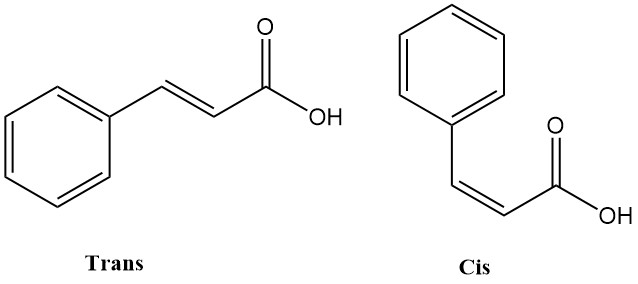
  • cinnamic acid structure
    Carboxylic Acids

    Cinnamic Acid: Properties, Production and Uses

    Cinnamic acid (3-phenylpropenoic acid) is an organic compound with the chemical formula C₆H₅CH=CHCOOH found in nature and commercially available. It exists in two isomeric forms: cis and trans. The trans isomer is more stable and is the predominant form found naturally and commercially.

    Read More Cinnamic Acid: Properties, Production and UsesContinue

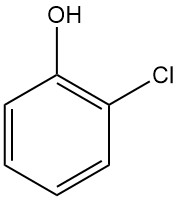
  • 2-chlorophenol structure
    Organic Chemicals

    2-Chlorophenol: Properties, Production and Uses

    2-Chlorophenol, also known as ortho-chlorophenol, is an aromatic compound with the chemical formula C6H4ClOH. It is a liquid with a strong, unpleasant odor.

    Read More 2-Chlorophenol: Properties, Production and UsesContinue

Page navigation

Previous PagePrevious 1 … 4 5 6 7 8 … 20 Next PageNext
At Chemcess, we are dedicated to providing accurate, comprehensive, and trustworthy information. All of our articles are meticulously researched, written, and reviewed by a qualified expert with advanced degrees and extensive research experience in organic, industrial, analytical, and physical chemistry. Our content is exclusively based on peer-reviewed scientific journals, authoritative academic books, and official data from reputable scientific institutions. To learn more about our methodology and commitment to accuracy, you can read our full Editorial Policy.
  • Privacy Policy
  • Editorial Policy
  • Terms and Conditions

Copyright © 2026 | by Chemcess team

  • HOME
  • Chemicals
  • Organic Chemicals
  • Chemical Processes
  • Inorganic Compounds
  • Carboxylic Acids
  • About
  • Contact Us
Search