Skip to content
Facebook Linkedin Pinterest YouTube
CHEMCESS
  • EnglishExpand
    • Français
    • Español
    • Deutsch
    • Italiano
    • Nederlands
  • HOME
  • Chemicals
  • Organic Chemicals
  • Chemical Processes
  • Inorganic Compounds
  • Carboxylic Acids
  • About
  • Contact Us
CHEMCESS
  • Anthracene structure
    Organic Chemicals

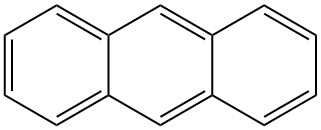
    Anthracene: Properties, Production and Uses

    Anthracene is a solid polycyclic aromatic hydrocarbon with the formula C14H10 that is composed of three fused benzene rings. It is a component of coal tar and was discovered in 1832 by J. Dumas and H. A. Laurent. Anthracene is colorless but exhibits a blue fluorescence under ultraviolet radiation.
    Read More Anthracene: Properties, Production and UsesContinue

  • Benzal Chloride structure
    Organic Chemicals

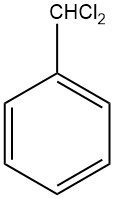
    Benzal Chloride: Properties, Production and Uses

    Benzal chloride (C6H5CHCl2) is a colorless liquid that is synthesized by chlorinating the side chain of toluene. It is also known as dichloromethylbenzene, α,α-dichlorotoluene, or benzylidene chloride. The first synthesis of benzal chloride was reported in 1848 by A. Cahours, who reacted benzaldehyde with phosphorus pentachloride (PCl5).

    Read More Benzal Chloride: Properties, Production and UsesContinue

  • benzyl chloride structure
    Organic Chemicals

    Benzyl Chloride: Properties, Production and Uses

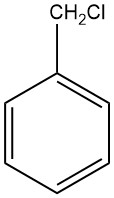
    Benzyl chloride, also known as α-chlorotoluene, is a toluene derivative with chlorine substitution in the side chain. It is a colorless liquid withthe chemical formula C7H7Cl.

    Read More Benzyl Chloride: Properties, Production and UsesContinue

  • aniline resin
    Chemicals

    Aniline Resins

    Aniline resins are a type of resin that is formed by the reaction of formaldehyde and aromatic amines. The initial step in this reaction, known as hydroxymethylation, occurs in an alkaline environment and produces a basic condensate.

    Read More Aniline ResinsContinue

  • Urethane resins
    Chemicals

    Urethane resins

    Urethane resins are formed by the condensation reaction of a urethane (carbamate) with an aldehyde. The reaction conditions determine whether a distinct compound or a resin is formed.

    Read More Urethane resinsContinue

  • Melamine Resins
    Chemicals

    Melamine Resins

    Melamine reacts with formaldehyde at pH 9–10 to form hexahydroxymethylmelamine. One mole of melamine combines with 6 moles of formaldehyde to produce hexahydroxymethylmelamine.

    Read More Melamine ResinsContinue

  • urea amino resins
    Chemicals

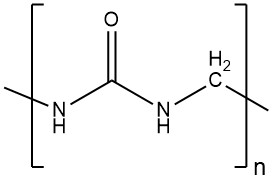
    Urea-Formaldehyde Resins

    All urea–formaldehyde condensates containing the recurring unit urea-methyl, from monomolecular to high molecular products. During the 1970s, multiple revelations emerged regarding the composition of urea–formaldehyde resins.

    Read More Urea-Formaldehyde ResinsContinue

  • uses of amino resins
    Chemicals

    Uses of Amino Resins

    Amino resins are a versatile class of materials with a wide range of applications. They are typically formed by the reaction of an amine with a formaldehyde, and can be further modified with a variety of other additives.

    Read More Uses of Amino ResinsContinue

  • Condensation reaction to form amino resins
    Chemical Processes

    Production of Amino Resins

    Amino resin production is a two-step process: hydroxymethylation and condensation. Hydroxymethylation is the addition of formaldehyde to an amino compound, such as urea, to form a hydroxymethyl derivative. Condensation is the reaction of two hydroxymethyl derivatives to form a larger molecule.

    Read More Production of Amino ResinsContinue

  • urea amino resins
    Chemicals

    Amino Resins

    Amino resins are condensation polymers formed by the reaction of carbonyl compounds with compounds containing amino, imino, or amide groups. The reaction releases water, and the resulting products are oligomers, also known as prepolymers.

    Read More Amino ResinsContinue

  • benzonitrile structure
    Organic Chemicals

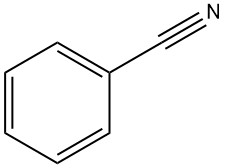
    Benzonitrile: Properties, Production and Uses

    Benzonitrile is an organic compound with the formula C7H5N, abbreviated PhCN. It is a colorless liquid with a sweet bitter almond odor. It is mainly used as a precursor to the resin benzoguanamine.

    Read More Benzonitrile: Properties, Production and UsesContinue

  • Sodium aluminate
    Inorganic Compounds

    Aluminate: Production and Uses

    Aluminates are metal salts of alumina (aluminum oxide, Al2O3). The most important aluminates in industry are sodium aluminate and barium aluminate.

    Read More Aluminate: Production and UsesContinue

Page navigation

Previous PagePrevious 1 … 10 11 12 13 14 … 20 Next PageNext
At Chemcess, we are dedicated to providing accurate, comprehensive, and trustworthy information. All of our articles are meticulously researched, written, and reviewed by a qualified expert with advanced degrees and extensive research experience in organic, industrial, analytical, and physical chemistry. Our content is exclusively based on peer-reviewed scientific journals, authoritative academic books, and official data from reputable scientific institutions. To learn more about our methodology and commitment to accuracy, you can read our full Editorial Policy.
  • Privacy Policy
  • Editorial Policy
  • Terms and Conditions

Copyright © 2026 | by Chemcess team

  • HOME
  • Chemicals
  • Organic Chemicals
  • Chemical Processes
  • Inorganic Compounds
  • Carboxylic Acids
  • About
  • Contact Us
Search