Skip to content
Facebook Linkedin Pinterest YouTube
CHEMCESS
  • EnglishExpand
    • Français
    • Español
    • Deutsch
    • Italiano
    • Nederlands
  • HOME
  • Chemicals
  • Organic Chemicals
  • Chemical Processes
  • Inorganic Compounds
  • Carboxylic Acids
  • About
  • Contact Us
CHEMCESS
  • Chlorosulfuric acid
    Inorganic Compounds

    Chlorosulfuric acid: Properties, Reactions, Production and Uses

    Chlorosulfuric acid, also known as chlorosulfonic acid, is an colorless and mobile liquid with exceptional reactivity. It exhibits strong fuming properties when exposed to air and has found applications as a smoke-generating agent in military operations.

    Read More Chlorosulfuric acid: Properties, Reactions, Production and UsesContinue

  • Hydrazine structure
    Inorganic Compounds

    Hydrazine: Properties, Reactions and Uses

    Hydrazine is an inorganic compound with the formula N2H4. It is a highly toxic colorless liquid with a strong ammonia-like odor.

    Read More Hydrazine: Properties, Reactions and UsesContinue

  • calcium hypochlorite
    Inorganic Compounds

    Bleaching Powder: Production and Uses

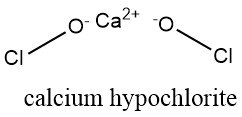
    Solid hypochlorite is a soft, white, dry powder. It is almost odorless or smell more or less strongly of chlorine or hydrochloric acid because of decomposition during storage.

    Read More Bleaching Powder: Production and UsesContinue

  • Bromine
    Inorganic Compounds

    Bromine: Reactions, Production and Uses

    Bromine is a dense, dark red, fuming, highly corrosive, and lacrimatory liquid. Its strong pungent odor is detectable at 1 ppm by volume in air.

    Read More Bromine: Reactions, Production and UsesContinue

  • calcium chloride CaCl2
    Inorganic Compounds

    Calcium chloride: properties, production and uses

    Calcium chloride, CaCl2, is a white, odorless, extremely water soluble salt that forms hydrates. It is found in small quantities, along with other salts, in seawater and in many mineral springs.

    Read More Calcium chloride: properties, production and usesContinue

  • Sodium hydroxide
    Inorganic Compounds

    Sodium Hydroxide: Properties and Uses

    Sodium hydroxide is a strong base with the formula NaOH. In its pure form it is a white crystalline solid, but it dissolves easily in water to form a colorless solution.

    Read More Sodium Hydroxide: Properties and UsesContinue

Page navigation

Previous PagePrevious 1 2 3
At Chemcess, we are dedicated to providing accurate, comprehensive, and trustworthy information. All of our articles are meticulously researched, written, and reviewed by a qualified expert with advanced degrees and extensive research experience in organic, industrial, analytical, and physical chemistry. Our content is exclusively based on peer-reviewed scientific journals, authoritative academic books, and official data from reputable scientific institutions. To learn more about our methodology and commitment to accuracy, you can read our full Editorial Policy.
  • Privacy Policy
  • Editorial Policy
  • Terms and Conditions

Copyright © 2026 | by Chemcess team

  • HOME
  • Chemicals
  • Organic Chemicals
  • Chemical Processes
  • Inorganic Compounds
  • Carboxylic Acids
  • About
  • Contact Us
Search