Skip to content
Facebook Linkedin Pinterest YouTube
CHEMCESS
  • EnglishExpand
    • Français
    • Español
    • Deutsch
    • Italiano
    • Nederlands
  • HOME
  • Chemicals
  • Organic Chemicals
  • Chemical Processes
  • Inorganic Compounds
  • Carboxylic Acids
  • About
  • Contact Us
CHEMCESS
  • production of Aldehydes by Oxo Synthesis
    Chemical Processes

    Production Methods of Aliphatic Aldehydes

    The primary method of producing aldehydes is oxo synthesis, achieved by mild oxidation (dehydrogenation) of primary alcohols and specialized olefin oxidation processes. In the essential oils of various plants, trace amounts of aldehydes occur naturally. Acetaldehyde, a byproduct of alcohol fermentation, forms by the decarboxylation of the intermediary pyruvic acid.


    Read More Production Methods of Aliphatic AldehydesContinue

  • 1,4-Butanediol structure
    Organic Chemicals

    1,4-Butanediol: Properties, Reaction, Production and Uses

    1,4-butanediol (often abbreviated as 1,4-BDO) is a chemical compound with the molecular formula C4H10O2. It is a colorless and odorless liquid that belongs to the family of diols, which are compounds that contain two hydroxyl (OH) groups.

    Read More 1,4-Butanediol: Properties, Reaction, Production and UsesContinue

  • Guerbet Alcohols
    Chemical Processes

    Production Methods of Aliphatic Alcohols

    Production of aliphatic alcohols occurs by various industrial processes, some of which are listed below:

    Synthesis from carbon monoxide and hydrogen (C1)
    Oxo synthesis, often accompanied by hydrogenation of initially formed aldehydes (C3 – C20)
    Hydrogenation of aldehydes, carboxylic acids, or esters
    Aldol condensation of lower aldehydes followed by hydrogenation of the alkenals (C3 → C6, C4 → C8, C8 → C16)
    Oxidation of trialkylaluminum compounds (Ziegler process)
    Oxidation of saturated hydrocarbons
    Hydration of olefins (C2–C4)
    Homologation of alcohols
    Hydrocarbonylation by the Reppe process
    Hydrocarboxymethylation
    Fermentation processes (C2–C5)
    Guerbet process

    Read More Production Methods of Aliphatic AlcoholsContinue

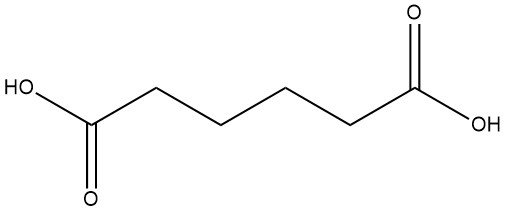
  • Adipic acid structure
    Carboxylic Acids

    Adipic Acid: Properties, Production and Uses

    Adipic acid, also known as hexanedioic acid or 1,4-butanedicarboxylic acid, is an organic compound with the formula C6H10O4. It is a widely used aliphatic dicarboxylic acid that appears as a white crystalline solid.

    Read More Adipic Acid: Properties, Production and UsesContinue

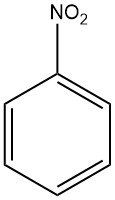
  • Nitrobenzene structure
    Organic Chemicals

    Nitrobenzene: Production, Reaction and Uses

    Nitrobenzene is an organic chemical compound with the molecular formula C6H5NO2. It is a pale yellow liquid with a distinctive odor similar to bitter almonds.

    Read More Nitrobenzene: Production, Reaction and UsesContinue

  • nitration reaction
    Chemical Processes

    Nitration of Aromatic Compounds

    The nitration reaction is a chemical process in which one or more nitro (NO2) groups are introduced into an aromatic nucleus by replacing a hydrogen atom. It is an electrophilic substitution reaction commonly used to modify aromatic compounds by attaching nitro groups, which can significantly alter their properties and reactivity.

    Read More Nitration of Aromatic CompoundsContinue

  • Friedel – Crafts acylation
    Chemical Processes

    Acylation of Aromatic Compounds

    The Friedel-Crafts acylation involves the production of an aromatic ketone by the reaction between an aromatic compound and an acylating agent, which could be an acyl halide, an acid anhydride, an acid, or an ester. This reaction takes place in the presence of an acidic catalyst.

    Read More Acylation of Aromatic CompoundsContinue

  • Friedel – Crafts alkylation of aromatic
    Chemical Processes

    Alkylation of Aromatic Compounds

    The Friedel-Crafts alkylation of aromatic compounds involves an acid-catalyzed electrophilic substitution, wherein an alkyl group replaces an aromatic hydrogen. A diverse range of alkylating agents, such as olefins, alkyl halides, and alcohols, is commonly employed for this purpose.

    Read More Alkylation of Aromatic CompoundsContinue

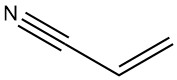
  • Acrylonitrile
    Organic Chemicals

    Acrylonitrile: Properties, Reactions, Production and Uses

    Acrylonitrile is a chemical compound with the chemical formula C3H3N. It is a clear, colorless liquid at room temperature and possesses a nitrile functional group attached to a carbon-carbon double bond. Acrylonitrile is an essential intermediate in the chemical industry and serves as a building block for various products.

    Read More Acrylonitrile: Properties, Reactions, Production and UsesContinue

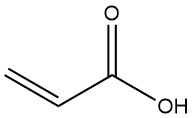
  • acrylic acid structure
    Carboxylic Acids

    Acrylic Acid: Properties, Reactions, Production and Uses

    Acrylic acid, also known as 2-propenoic acid, is the simplest unsaturated carboxylic acid with the formula CH2=CHCOOH. It is a colorless liquid that is flammable, volatile and slightly toxic.

    Read More Acrylic Acid: Properties, Reactions, Production and UsesContinue

  • Acrolein structure
    Organic Chemicals

    Acrolein: Properties, Reactions, Production and Uses

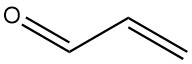
    Acrolein, also known as propenal or acrylaldehyde, is the simplest unsaturated aldehyde with the formula C3H4O. It is a volatile, colorless liquid with a strong odor that is both toxic and tear-inducing.

    Read More Acrolein: Properties, Reactions, Production and UsesContinue

  • Acridine
    Organic Chemicals

    Acridine: Production, Properties and Uses

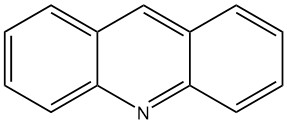
    Acridine is an organic compound, a nitrogen heterocycle, with the molecular formula C13H9N. It was first discovered in 1870 by C. Graebe and H. Caro in coal-tar anthracene oil and was later identified as dibenzopyridine by C. Riedel, A. Bernthsen, and F. Bender in 1883.

    Read More Acridine: Production, Properties and UsesContinue

Page navigation

Previous PagePrevious 1 … 12 13 14 15 16 … 20 Next PageNext
At Chemcess, we are dedicated to providing accurate, comprehensive, and trustworthy information. All of our articles are meticulously researched, written, and reviewed by a qualified expert with advanced degrees and extensive research experience in organic, industrial, analytical, and physical chemistry. Our content is exclusively based on peer-reviewed scientific journals, authoritative academic books, and official data from reputable scientific institutions. To learn more about our methodology and commitment to accuracy, you can read our full Editorial Policy.
  • Privacy Policy
  • Editorial Policy
  • Terms and Conditions

Copyright © 2026 | by Chemcess team

  • HOME
  • Chemicals
  • Organic Chemicals
  • Chemical Processes
  • Inorganic Compounds
  • Carboxylic Acids
  • About
  • Contact Us
Search