Skip to content
Facebook Linkedin Pinterest YouTube
CHEMCESS
  • EnglishExpand
    • Français
    • Español
    • Deutsch
    • Italiano
    • Nederlands
  • HOME
  • Chemicals
  • Organic Chemicals
  • Chemical Processes
  • Inorganic Compounds
  • Carboxylic Acids
  • About
  • Contact Us
CHEMCESS
  • boric oxide powder
    Inorganic Compounds

    Boron trioxide: Properties, Production and Uses

    Boron trioxide, also known as diboron trioxide, is the compound with the chemical formula B₂O₃. It is a colorless, transparent solid that is almost always glassy (amorphous), but can be crystallized with great difficulty.
    Read More Boron trioxide: Properties, Production and UsesContinue

  • Antimony trioxide formula
    Inorganic Compounds

    Antimony Trioxide: Production, Uses and Toxicology

    Antimony trioxide (Sb2O3) is a white crystalline powder with a molar mass of 291.52 g/mol and a melting point of 656°C. It has two forms: senarmontite (below 570°C) and valentinite (above 570°C).

    Read More Antimony Trioxide: Production, Uses and ToxicologyContinue

  • Arsenic Trioxide
    Inorganic Compounds

    Arsenic Trioxide: Production and Uses

    Arsenic trioxide, also known as white arsenic, is a highly toxic substance with a chemical formula of As2O3 and a molecular weight of 197.8 g/mol. It exists in three forms: two crystalline and one amorphous.

    Read More Arsenic Trioxide: Production and UsesContinue

  • Sodium aluminate
    Inorganic Compounds

    Aluminate: Production and Uses

    Aluminates are metal salts of alumina (aluminum oxide, Al2O3). The most important aluminates in industry are sodium aluminate and barium aluminate.

    Read More Aluminate: Production and UsesContinue

  • aluminum chloride
    Inorganic Compounds

    Aluminum Chloride: Properties, Production and Uses

    Hans Christian Oersted first prepared anhydrous aluminum chloride in 1825 by passing chlorine gas through a heated mixture of alumina and carbon. This compound is a significant catalyst in organic chemistry, particularly for Friedel-Crafts alkylation and acylation, which are used to produce alkylated aromatics, dyestuffs, pharmaceuticals, and perfumery chemicals.

    Read More Aluminum Chloride: Properties, Production and UsesContinue

  • Alum crystals
    Inorganic Compounds

    Alums: Properties, Production and Uses

    Alum, recognized as a double salt of potassium and aluminum sulfates, was known among the ancient Greeks and Romans as both an astringent and a mordant for wool dyeing. It found diverse application, extending to skin processing, preservation of both animal and human remains, and for fireproofing wood.

    Read More Alums: Properties, Production and UsesContinue

  • Aluminum sulfate
    Inorganic Compounds

    Aluminum Sulfate: Properties, Production and Uses

    Aluminum sulfate is a white, odorless, crystalline solid. It is a chemical compound with the formula Al2(SO4)3. It is soluble in water and forms a clear solution. Aluminum sulfate is a common industrial chemical and is used for a variety of purposes.

    Read More Aluminum Sulfate: Properties, Production and UsesContinue

  • Ammonium chloride structure
    Inorganic Compounds

    Ammonium Chloride: Properties, Production and Uses

    Ammonium chloride (NH4Cl) is a chemical compound composed of ammonia (NH3) and hydrochloric acid (HCl). It exists as a white crystalline solid with a characteristic salty taste and is commonly known as sal ammoniac.

    Read More Ammonium Chloride: Properties, Production and UsesContinue

  • Ammonium nitrate structure
    Inorganic Compounds

    Ammonium Nitrate: Properties, Production and Uses

    Ammonium nitrate (NH4NO3) is a chemical compound composed of ammonium ions (NH4+) and nitrate ions (NO3-). It is a colorless, crystalline substance widely used in various applications, including agriculture, industry, and explosives.

    Read More Ammonium Nitrate: Properties, Production and UsesContinue

  • Ammonium Sulfate structure
    Inorganic Compounds

    Ammonium Sulfate: Properties, Production and Uses

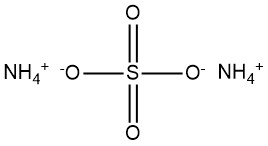
    Ammonium sulfate is a chemical compound with the formula (NH4)2SO4. It is commonly encountered as a white, crystalline powder or granular substance. It has emerged as a significant compound during the 19th century produced from ammonia found in coke-oven gas.

    Read More Ammonium Sulfate: Properties, Production and UsesContinue

  • Hydrochloric acid
    Inorganic Compounds

    Hydrochloric acid: Properties, Production and Uses

    Hydrochloric acid, known by its alternative name muriatic acid, is a solution of strong inorganic acid with the chemical formula HCl. It is a colorless liquid with a pungent odor that is very corrosive to skin, eyes and metals.

    Read More Hydrochloric acid: Properties, Production and UsesContinue

  • Hydroxylamine structure
    Inorganic Compounds

    Hydroxylamine: Properties, Reactions, Production and Uses

    Hydroxylamine is an inorganic compound with the chemical formula NH2OH. It’s a white crystalline solid, but due to its hygroscopic nature, it is almost always found and used in aqueous solution.

    Read More Hydroxylamine: Properties, Reactions, Production and UsesContinue

Page navigation

Previous PagePrevious 1 2 3 Next PageNext
At Chemcess, we are dedicated to providing accurate, comprehensive, and trustworthy information. All of our articles are meticulously researched, written, and reviewed by a qualified expert with advanced degrees and extensive research experience in organic, industrial, analytical, and physical chemistry. Our content is exclusively based on peer-reviewed scientific journals, authoritative academic books, and official data from reputable scientific institutions. To learn more about our methodology and commitment to accuracy, you can read our full Editorial Policy.
  • Privacy Policy
  • Editorial Policy
  • Terms and Conditions

Copyright © 2026 | by Chemcess team

  • HOME
  • Chemicals
  • Organic Chemicals
  • Chemical Processes
  • Inorganic Compounds
  • Carboxylic Acids
  • About
  • Contact Us
Search